DevOps Principles Applied
Let’s connect the concepts
Section titled “Let’s connect the concepts”Take a typical Node/Express app.
A DevOps-aware version of thinking about that app includes questions like:
- Can someone else build this the same way I do?
- Are dependencies declared clearly in
package.json?
Configuration
Section titled “Configuration”- Are environment variables separated from source code?
- Is configuration explicit?
Runtime
Section titled “Runtime”- What starts the process (
npm start,node index.js)? - Which port is exposed?
- What runtime version of Node is expected?
Deployment
Section titled “Deployment”- Can I package this app consistently?
- Can I release it without ad hoc manual setup?
Operations
Section titled “Operations”- If it crashes, how do I know?
- Where do logs go?
- Can I inspect what happened?
That is DevOps in miniature. It’s about predictability, consistency, and visibility.
Small Habits, Big Impact
Section titled “Small Habits, Big Impact”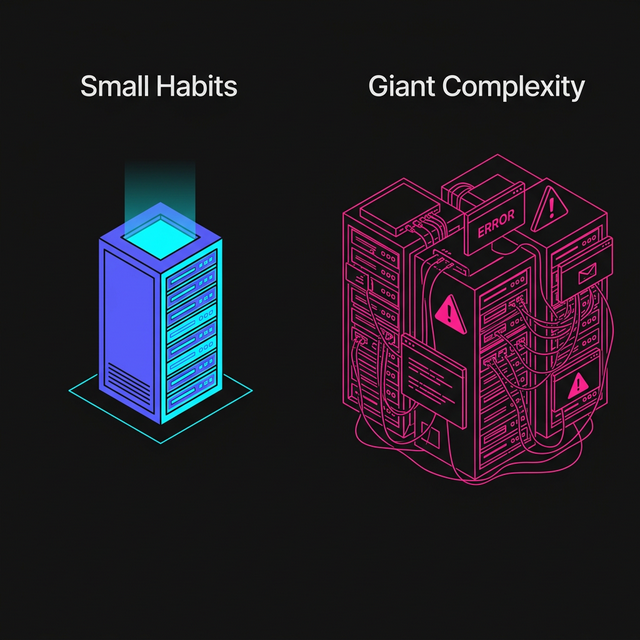
Fig 1: Small Habits vs. Giant Complexity
DevOps is not only for giant cloud-native systems with 40 dashboards and seven teams yelling in Kubernetes.
It starts with small habits:
- define your environment clearly
- automate repeatable steps
- avoid mystery setup
- make failures visible
- design for consistency
If you can’t reliably deploy a simple Node/Express application, scaling up to microservices won’t solve your problems; it will multiply them. That is exactly the kind of foundation we want to build here.
Extra Bits & Bytes
Section titled “Extra Bits & Bytes”Martin Fowler: Scale vs Simplicity
⏭ Clearing the Fog
Section titled “⏭ Clearing the Fog”Before we start applying these principles to containers, let’s take a quick moment to dispel some lingering myths. Here is what DevOps emphatically is not.