Immutable Infrastructure
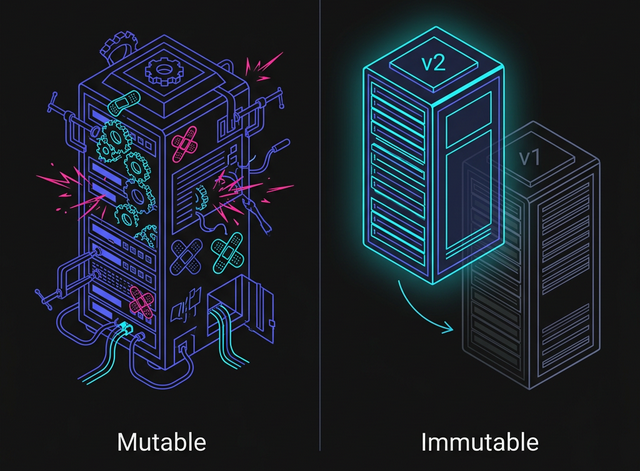
Fig 1: Mutable vs. Immutable Infrastructure
Mutable vs immutable thinking
Section titled “Mutable vs immutable thinking”This is a very important DevOps idea that changes how you respond to production issues.
The Mutable approach
Section titled “The Mutable approach”In a mutable model, a running server is changed over time. People might:
- log in manually
- edit config files directly
- install packages by hand
- patch things in place
- leave the environment slightly different after each change
Mutable infrastructure can work for a while, but it gets messy fast. Soon, nobody knows exactly what is running on that machine, only that you shouldn’t touch it or it will break.
The Immutable approach
Section titled “The Immutable approach”Instead of manually changing the running environment, we create a fresh version and replace the old one entirely.
That means:
- build a new artifact
- deploy the new artifact
- run the new version
- discard the old one
Why immutable thinking is powerful
Section titled “Why immutable thinking is powerful”Immutable workflows are generally:
- easier to reproduce
- easier to reason about
- easier to roll back
- less dependent on manual patching
- less vulnerable to environment drift
When you know that the running version is exactly what you defined in code, and not a patched-together survivor of a dozen late-night SSH sessions, confidence goes way up.
Connect it to containers
Section titled “Connect it to containers”Containers are a great teaching bridge into immutable thinking.
Rather than treating a running server as a pet that gets endlessly hand-fed and hand-fixed, we treat the container runtime more like a replaceable unit built from a known recipe (our Dockerfile).
That is a much healthier model for building reliable applications.
Extra Bits & Bytes
Section titled “Extra Bits & Bytes”HashiCorp: Mutable vs Immutable Infrastructure
⏭ Keeping the Lights On
Section titled “⏭ Keeping the Lights On”So we build our app, we define its environment, we package it immutably, and we run it. Are we done? Not quite. We need to know what it is doing out there in the wild.