What DevOps Actually Is
DevOps is not a single tool.
It is not Docker.
It is not GitHub Actions.
It is not AWS.
It is not “the deployment team.”
And it is definitely not a magic sticker you slap on a project to make it sound enterprise.
DevOps is a way of thinking about how software gets built, tested, shipped, operated, and improved.
At its core, DevOps is about reducing friction between:
- development work
- operations work
- release processes
- production systems
- feedback after deployment
In simple terms, DevOps asks:
- how do we get code from a developer’s machine into a running environment safely?
- how do we do that repeatedly?
- how do we reduce manual errors?
- how do we know what is happening after deployment?
- how do we recover quickly when something breaks?
That is the real territory.
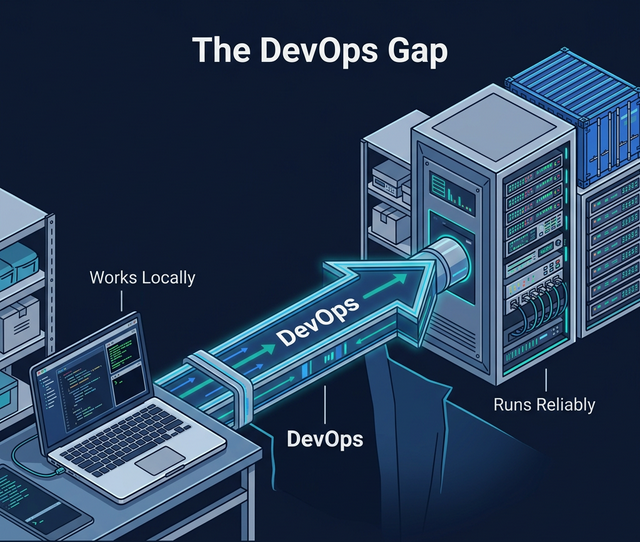
Fig 1: The DevOps Gap (Works Locally vs. Runs Reliably)
Ground it in the Node app
Section titled “Ground it in the Node app”Think about a Node app we have already built.
Locally, it may have:
- Node installed
- dependencies already working
.envvariables set up- the right version of npm
- a local database connection
- files sitting in exactly the expected places
So locally, the app may feel “done.”
The second that app needs to run anywhere else, new questions appear. “It works on my machine” is not an acceptable finish line in professional software engineering.
When moving from local development to a running environment, we need to answer:
- what version of Node is required?
- how are dependencies installed?
- how is configuration injected?
- what command starts the app?
- what port does it listen on?
- how do we restart it if it crashes?
- where do logs go?
- how do we deploy changes without chaos?
That gap between works locally and runs reliably in a repeatable way is where DevOps starts doing real work.
Extra Bits & Bytes
Section titled “Extra Bits & Bytes”AWS: What is DevOps?
⏭ The Old Divide
Section titled “⏭ The Old Divide”We know what DevOps is trying to fix. But how did development and operations get so misaligned in the first place? Let’s look at why DevOps became necessary.